
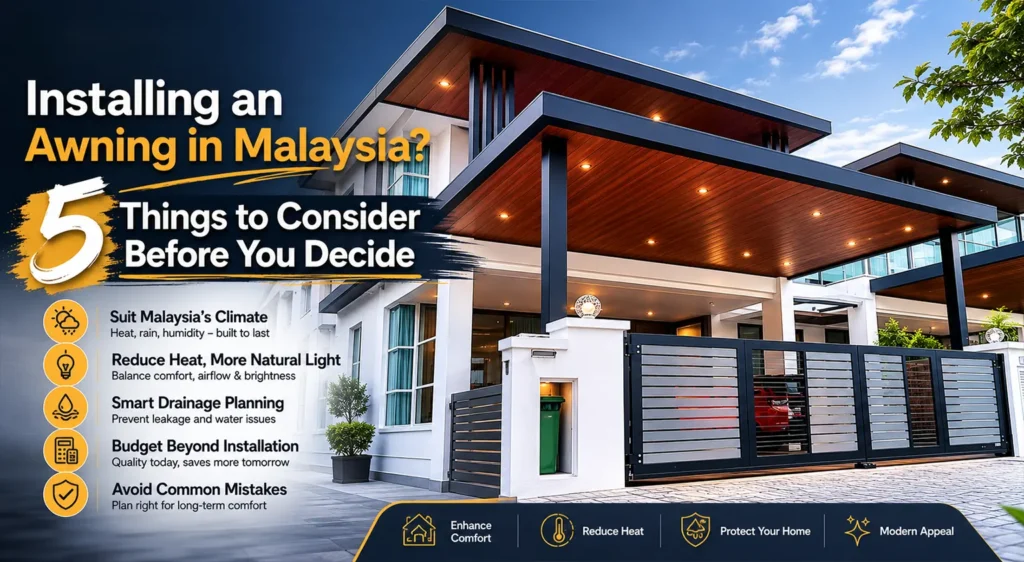
Installing an Awning in Malaysia? 5 Things to Consider Before You Decide
Installing an awning in Malaysia is about far more than choosing a design that looks good. With constant heat, sudden heavy rain, and year-round humidity, the wrong material or poor installation planning can quickly lead to water leakage, trapped heat, structural wear, and unnecessary maintenance costs.
For many homeowners, an awning is no longer just an additional roof. It has become part of the overall exterior design — affecting comfort, functionality, and even the visual harmony of the home itself.
Whether you’re planning a front porch awning, side yard cover, backyard extension, or a complete exterior upgrade, understanding the key factors before installation can help you avoid costly mistakes later on.
Here are five important things every homeowner should consider before installing an awning in Malaysia.
1. Choose an Awning Material That Fits Malaysia’s Climate
One of the most common questions homeowners ask is:
“What is the best awning material for Malaysian weather?”
The answer depends on your space, heat exposure, maintenance expectations, and long-term usage.
Aluminium Awning
Aluminium remains one of the most popular choices for modern Malaysian homes.
Why many homeowners prefer it:
- Rust-resistant in humid conditions
- Minimal maintenance
- Clean and modern appearance
- Durable for long-term outdoor use
It is commonly used for:
- Car porch awnings
- Main entrances
- Side extensions
- Modern landed homes
For homeowners looking for a balance between durability and modern exterior aesthetics, aluminium continues to be one of the most practical long-term options.
Glass Awning with Aluminium Strip Ceiling
Glass awnings are increasingly popular for homeowners who want brighter, more open-looking spaces.
Benefits include:
- Better natural lighting
- More spacious visual appearance
- Cleaner architectural feel
However, glass alone may increase heat buildup if not designed properly.
This is why many modern awning systems now combine glass panels with aluminium strip ceilings, allowing homeowners to maintain natural light while reducing excessive heat exposure.
The balance between shade and openness is often what creates the most comfortable outdoor environment.
Polycarbonate Awning
Polycarbonate is usually chosen for projects with tighter budgets or lighter structural requirements.
Advantages:
- Lower initial cost
- Lightweight material
- Faster installation process
Things to consider:
- Lower-grade polycarbonate may discolor under prolonged UV exposure
- Material lifespan can vary significantly depending on quality
For long-term exterior durability, material quality matters more than simply choosing the lowest quotation.
PU Foam Ceiling Awning
For homeowners prioritizing thermal comfort, PU foam ceiling systems are commonly considered.
Benefits include:
- Better heat insulation
- Cooler covered spaces
- More complete ceiling appearance
This type of awning is often suitable for:
- Backyard extensions
- Outdoor dining spaces
- Covered family areas
- Extended living spaces
In many Malaysian homes, especially west-facing properties exposed to strong afternoon sunlight, ceiling insulation can significantly affect daily comfort.
2. Balance Heat Reduction with Natural Light
A common concern homeowners have is:
“Will installing an awning make my house darker?”
A properly designed awning should not simply block heat — it should also maintain airflow and comfortable natural lighting.
The goal is balance, not maximum coverage.
Different Spaces Need Different Approaches
Every area of a home functions differently.
Front Porch & Main Entrance
Usually prioritizes:
- Vehicle protection
- Exterior appearance
- Balanced daylight
Many homeowners prefer aluminium structures combined with selective glass sections to avoid creating an overly enclosed feeling.
Side Yard
Side areas often benefit more from:
- Ventilation
- Air circulation
- Controlled sunlight
Over-covering these spaces may sometimes make them feel warmer and less comfortable.
Backyard Extensions
For extended outdoor living spaces, heat reduction usually becomes the main priority.
Insulated ceiling systems such as PU foam panels are commonly used to improve comfort throughout the day.
Good Design Should Improve Daily Living
A well-planned awning should help:
- Reduce indoor heat
- Improve outdoor usability
- Maintain natural brightness
- Enhance the exterior appearance of the home
Homeowners should never feel forced to choose between a cooler home and a brighter space.
3. Proper Drainage Planning Matters More Than Most Homeowners Realise
Malaysia’s tropical weather makes drainage design one of the most important parts of awning installation.
Unfortunately, it is also one of the most overlooked.
Poor water flow planning can eventually cause:
- Water leakage
- Water pooling
- Wall staining
- Ceiling damage
- Long-term structural deterioration
In areas like Klang Valley, where sudden afternoon storms are common, improper drainage systems can quickly become a recurring maintenance issue.
Hidden Gutter vs Traditional Gutter Systems
Modern homes increasingly prefer hidden gutter awning systems because of their cleaner and more seamless appearance.
Benefits include:
- More refined exterior aesthetics
- Better integration with modern façades
- Cleaner water flow management
However, the effectiveness of any drainage system depends heavily on proper execution.
Correct slope angles, outlet positioning, and water flow direction are critical factors that should never be overlooked during installation planning.
Drainage Problems Usually Start with Poor Planning
Many leakage issues are not caused by the material itself.
Instead, they often result from:
- Incorrect slope calculations
- Insufficient drainage outlets
- Poor structural alignment
- Existing site limitations
This is why proper on-site evaluation is often more important than simply choosing premium materials.
4. Budget Beyond the Initial Installation Cost
When researching awning prices in Malaysia, many homeowners focus only on the upfront quotation.
However, the actual long-term cost depends on several factors beyond the basic structure itself.
What Affects Awning Pricing?
Pricing may vary depending on:
- Material selection
- Ceiling system type
- Structural size
- Drainage complexity
- Lighting integration
- Site conditions
- Custom fabrication requirements
A larger or more complex design naturally requires different structural planning compared to standard installations.
The Cheapest Option May Cost More Later
Lower quotations sometimes lead to:
- Frequent maintenance
- Material deterioration
- Water leakage repairs
- Repainting work
- Premature replacement
For exterior upgrades exposed to Malaysian weather conditions daily, long-term durability often matters more than short-term savings.
A properly planned installation can reduce future repair costs while improving overall usability and comfort.
5. Avoid Common Mistakes That Lead to Future Renovation Problems
Even visually attractive awning designs can become problematic if functionality is ignored.
Here are some of the most common mistakes homeowners encounter.
Choosing Based Only on Appearance
An awning should not only look good in photos.
It should also suit:
- Your daily lifestyle
- Sunlight direction
- Heat exposure
- Ventilation needs
- Structural conditions
A design that works beautifully for one property may not work the same way for another.
Ignoring Existing Structural Conditions
Every landed home has different site conditions.
Examples include:
- Uneven ground levels
- Existing beams
- Limited structural support
- House extensions
- Space constraints
Ignoring these factors may eventually lead to leakage issues or structural complications.
Planning Exterior Upgrades Separately
Many homeowners install an awning first, then later upgrade their:
- Auto gate
- Security door
- Fencing
- Lighting
- Exterior finishes
Without proper planning, the final exterior appearance can sometimes feel visually disconnected.
Planning exterior elements together often creates a cleaner, more cohesive home façade in the long run.
Frequently Asked Questions
Which awning material lasts the longest in Malaysia?
High-quality aluminium and insulated PU foam ceiling systems are generally considered among the most durable options due to their resistance to rust, humidity, and weather exposure.
Is a glass awning too hot for Malaysian weather?
Not necessarily. Many modern awning systems combine glass with aluminium strip ceilings or insulated sections to balance natural lighting with heat reduction.
How much does an awning cost in Malaysia?
Awning pricing varies depending on material type, structure size, drainage requirements, and installation complexity. A proper site evaluation usually provides the most accurate recommendation and quotation.
Can installing an awning improve property appearance?
A well-designed awning can improve comfort, usability, and the overall exterior presentation of a landed property — especially when integrated properly with the rest of the home design.
Final Thoughts
A well-designed awning should feel like part of the home — not an afterthought added later.
From material selection and heat management to drainage planning and exterior coordination, every detail plays a role in long-term comfort, durability, and maintenance.
For homeowners exploring modern awning solutions in Malaysia, proper planning often matters more than the installation itself.
At VANTAGE, we provide on-site consultation and exterior planning for homeowners across Klang Valley and selected surrounding areas. Whether you’re comparing materials, evaluating drainage flow, or planning a complete exterior upgrade involving awning, auto gate, and security door systems, understanding your property conditions early can help prevent costly changes later on.
Menu
Products
Contact Information
© Copyright 2026 Vantage