

Which Awning Material Is Best in Malaysia? A Homeowner’s Guide
When planning a new awning for your home, one of the first questions many homeowners ask is:
“Which awning material is best for my home?”
It’s an important question because your awning will be exposed to Malaysia’s hot sun, heavy rain, humidity, and changing weather every day. Choosing the right material can affect not only how your home looks, but also how comfortable and practical your outdoor space is over the years.
Today, homeowners have more awning options than ever before. From ceiling awnings and ACP awnings to glass and polycarbonate roofing, each solution offers different advantages in terms of appearance, natural lighting, maintenance, and functionality.
Rather than looking for a single “best” material, it’s more useful to understand which option best suits your home’s design and your daily needs.
This guide compares the most popular awning materials used in Malaysia, explains where each one performs best, and highlights the factors every homeowner should consider before making a decision.
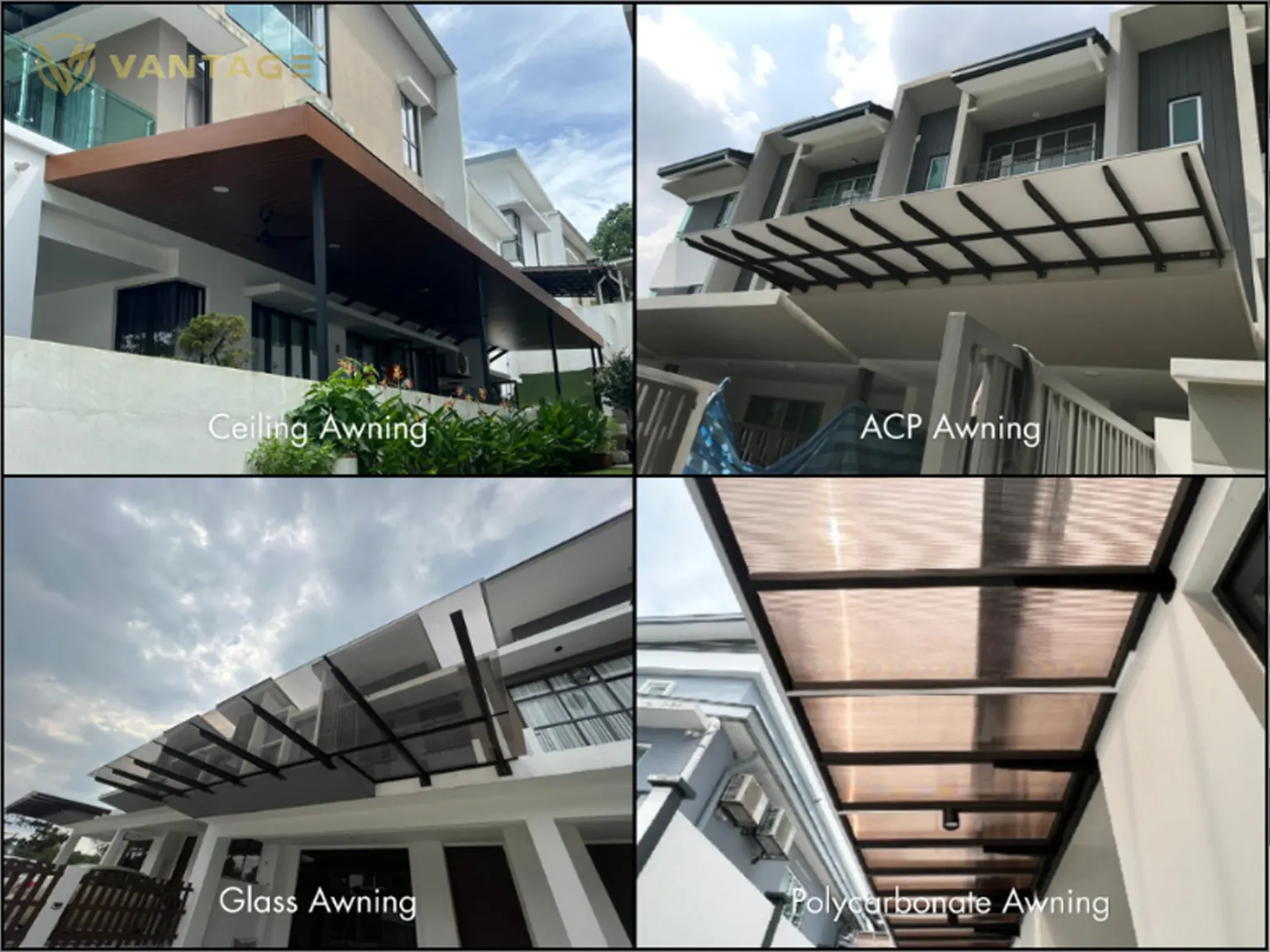
Quick Comparison of Popular Awning Types performance.
| Awning Type | Appearance | Natural Light | Maintenance | Best For |
| Ceiling Awning | ★★★★★ | ★☆☆☆☆ | Low | Modern homes |
| ACP Awning | ★★★★★ | ★☆☆☆☆ | Low | Large covered areas |
| Glass Awning | ★★★★★ | ★★★★★ | Moderate | Premium entrances |
| Polycarbonate Awning | ★★★★☆ | ★★★★☆ | Moderate | Side porches & walkways |
Although the awning type plays an important role, structural design, fabrication quality, and professional installation are equally important in determining long-term performance.
Ceiling Awning
Ceiling awnings have become one of the most popular choices for homeowners who prefer a clean, finished, and contemporary exterior.
Unlike exposed roofing structures, a ceiling awning conceals the supporting framework, creating a seamless appearance while providing space for integrated lighting and ceiling fans. This makes it an excellent choice for homeowners who want both functionality and refined aesthetics.
Why homeowners choose ceiling awnings
- Modern and minimalist appearance
- Clean ceiling finish with concealed structure
- Works well with integrated LED downlights
- Strong structural performance
- Complements contemporary architecture
Modern ceiling awnings are commonly finished with aluminium strip ceiling panels, creating a seamless ceiling effect that enhances the overall appearance of the outdoor space while hiding structural components.
Things to consider
Not every ceiling awning delivers the same level of quality.
The final result depends on several factors, including:
- Ceiling panel material
- Structural design
- Fabrication quality
- Drainage planning
- Installation workmanship
A well-designed ceiling awning should not only look refined but also continue performing reliably for many years.
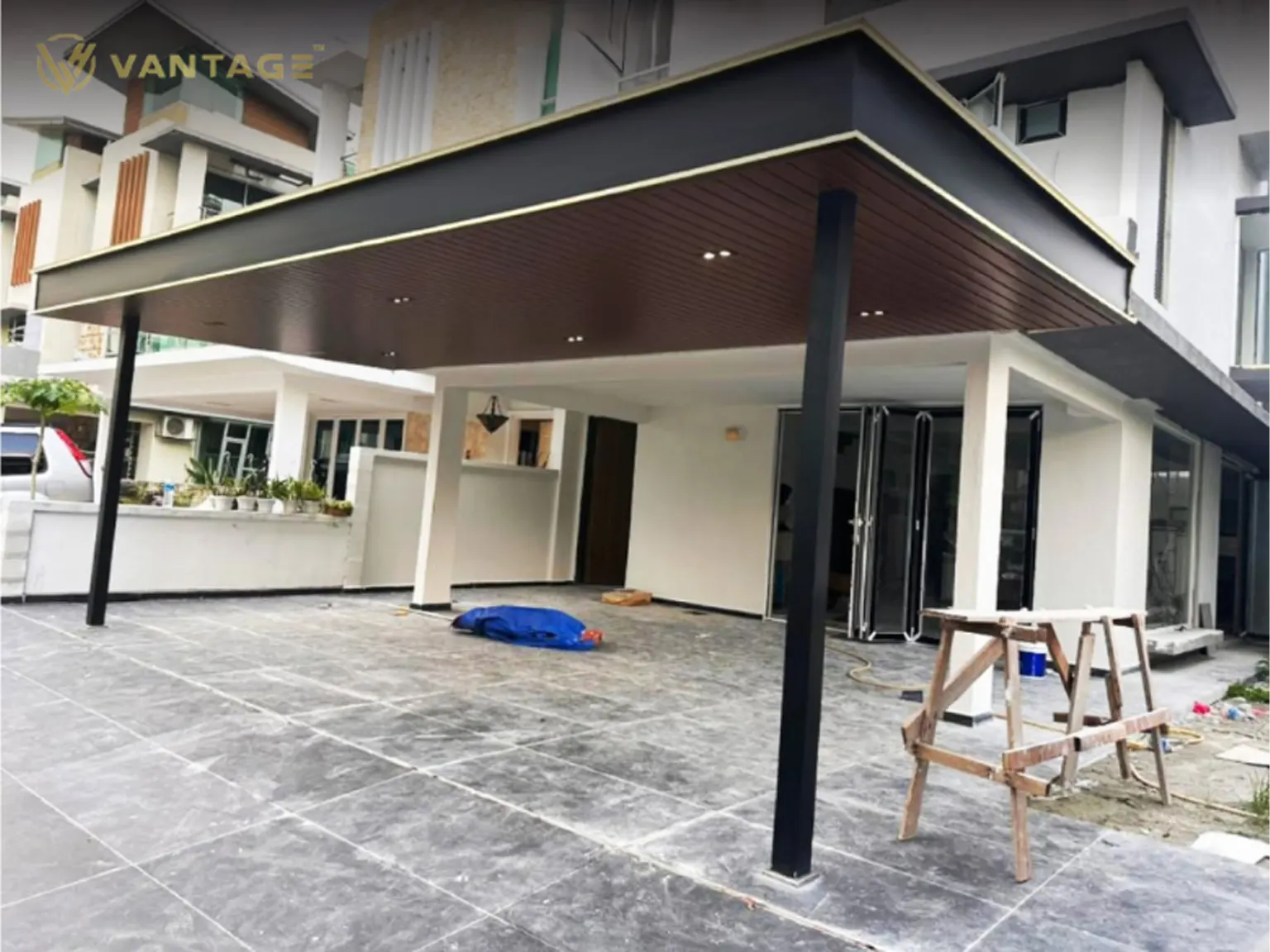
A modern ceiling awning creates a clean and refined architectural finish.
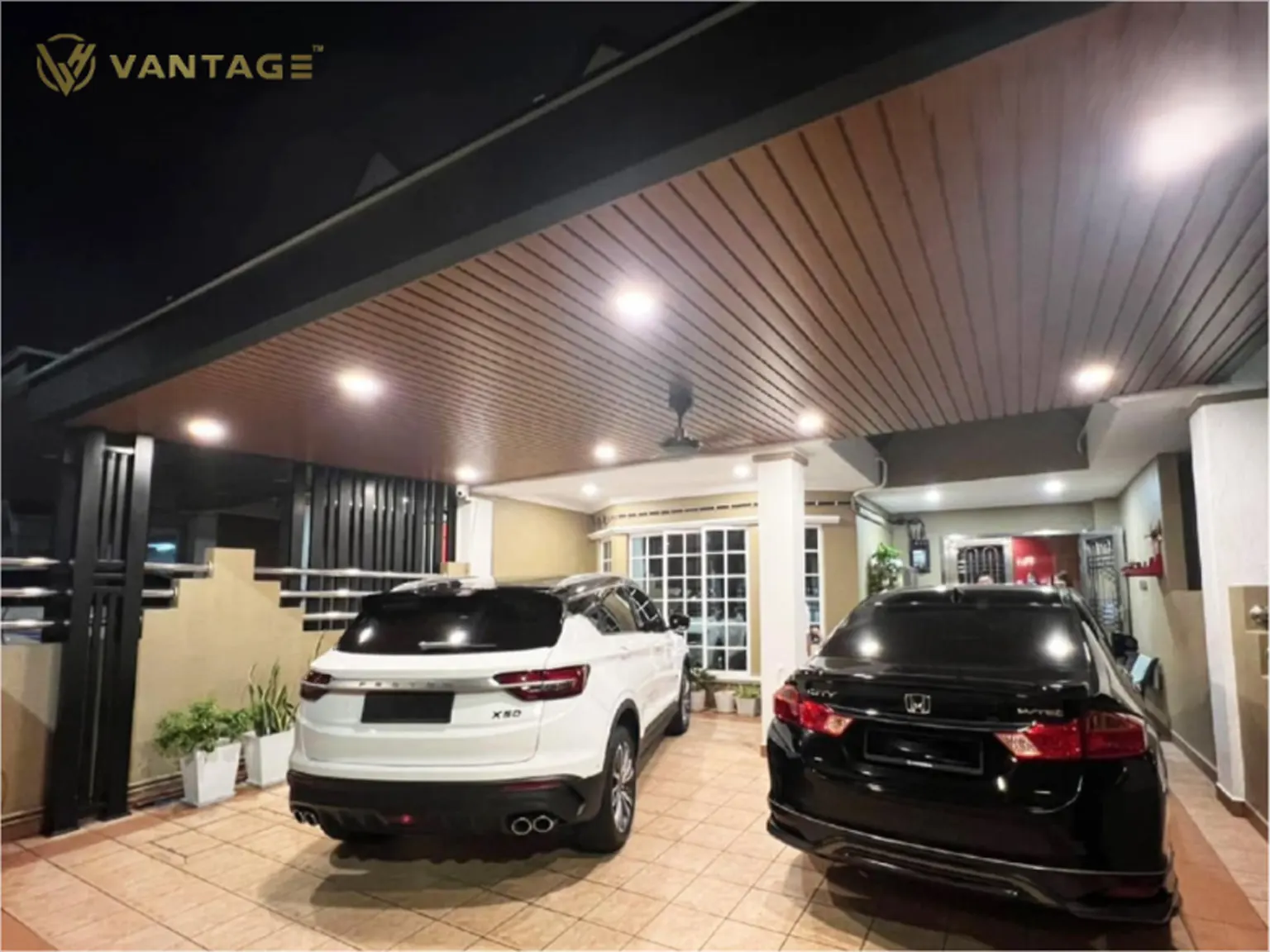
Integrated LED downlights enhance both functionality and ambience, making the outdoor space equally enjoyable during the evening.
ACP (Aluminium Composite Panel) Awning
ACP awnings have become increasingly popular for homeowners who prefer a solid roof with a premium architectural finish.
Instead of allowing sunlight to pass through, ACP creates a more sheltered and private outdoor environment.
Advantages of ACP awnings
- Premium modern appearance
- Excellent privacy
- Clean, minimalist façade
- Pairs well with concealed drainage systems
- Durable and weather-resistant
- Low maintenance and easy to clean
ACP is often selected for double-storey terrace houses, semi-detached homes, corner lots, and modern bungalows because of its sleek appearance.
Many homeowners also appreciate its ability to blend seamlessly with modern trackless gates and contemporary home exteriors.

ACP roofing creates a clean architectural look while providing full weather protection.
Glass Awning
Glass awnings remain a popular choice for homeowners seeking a luxurious entrance while maintaining natural daylight.
Rather than making the entrance feel enclosed, glass creates a brighter and more spacious environment.
Benefits of glass awnings
- Elegant appearance
- Excellent natural lighting
- Creates an open feeling
- Complements modern architecture
- Suitable for premium entrances and walkways
Laminated glass is commonly used for residential applications because it provides additional strength while maintaining a clean, sophisticated appearance.
Things to consider
Glass surfaces benefit from regular cleaning to maintain their clarity.
Professional structural design and proper installation are equally important, particularly when larger glass panels are involved.

A laminated glass awning keeps the entrance bright while adding a premium architectural touch.
Polycarbonate Awning
Polycarbonate remains one of the most widely used awning materials in Malaysia because it provides weather protection while allowing natural light into outdoor spaces.
It is commonly installed in areas where homeowners want to maintain brightness during the day.
Common applications
- Side porches
- Patios
- Walkways
- Backyard extensions
- Balcony areas
Advantages
- Allows natural daylight
- Available in different colours and tint options
- Brightens outdoor spaces
- Suitable for many residential applications
Things to consider
Not all polycarbonate sheets are manufactured to the same standard.
Their long-term performance depends on:
- UV protection
- Product quality
- Sheet thickness
- Installation quality
Choosing quality materials and professional installation can significantly improve durability.

Polycarbonate roofing allows natural daylight while providing weather protection for walkways and side areas.
Which Awning Type Performs Best in Malaysia’s Climate?
Malaysia’s tropical climate places continuous demands on outdoor structures.
Instead of asking which awning type is “best,” homeowners should compare how each option performs in everyday use and choose one that best suits their home’s design and lifestyle.
| Feature | Ceiling Awning | ACP Awning | Glass Awning | Polycarbonate Awning |
| Natural daylight | Limited | Limited | Excellent | Good |
| Privacy | Excellent | Excellent | Moderate | Moderate |
| Modern appearance | Excellent | Excellent | Excellent | Good |
| Maintenance | Low | Low | Moderate | Moderate |
| Best suited for | Modern homes | Large covered areas | Entrances & walkways | Side porches & patios |
No awning type is perfect for every situation.
The best choice depends on how you balance appearance, natural lighting, privacy, maintenance, and the overall architectural style of your home.
Does Awning Material Affect Maintenance?
Many homeowners assume that some awning materials require no maintenance at all.
In reality, every awning benefits from routine cleaning and periodic inspection.
Generally speaking:
- Ceiling awnings require minimal maintenance, with occasional cleaning helping to preserve the appearance of the ceiling panels and integrated lighting.
- ACP awnings are easy to maintain while providing a clean architectural appearance.
- Glass awnings benefit from regular cleaning to maintain their clarity.
- Polycarbonate awnings should be cleaned periodically to preserve both their appearance and natural light transmission.
Simple maintenance, such as clearing leaves from gutters and checking water drainage, can also help extend the lifespan of any awning system.
How Long Can an Awning Last?
There is no fixed lifespan that applies to every awning.
Long-term durability depends on much more than the roofing material itself.
Important factors include:
- Material quality
- Structural design
- Fabrication standards
- Installation workmanship
- Drainage planning
- Regular maintenance
A professionally designed awning built with quality materials can continue performing well for many years.
Likewise, even premium materials may develop problems if installation quality or structural design is compromised.
Which Awning Material Is Best for Different Homeowners?
There isn’t a single awning material that is perfect for every home.
The best choice depends on your home’s architecture, the amount of natural light you prefer, your maintenance expectations, and how you plan to use the space every day.
For Modern Minimalist Homes
If your home features clean architectural lines and a contemporary exterior, ceiling awnings and ACP awnings are often the most suitable choices.
They complement modern homes by creating a seamless, uncluttered appearance.
Recommended materials:
- Ceiling Awning
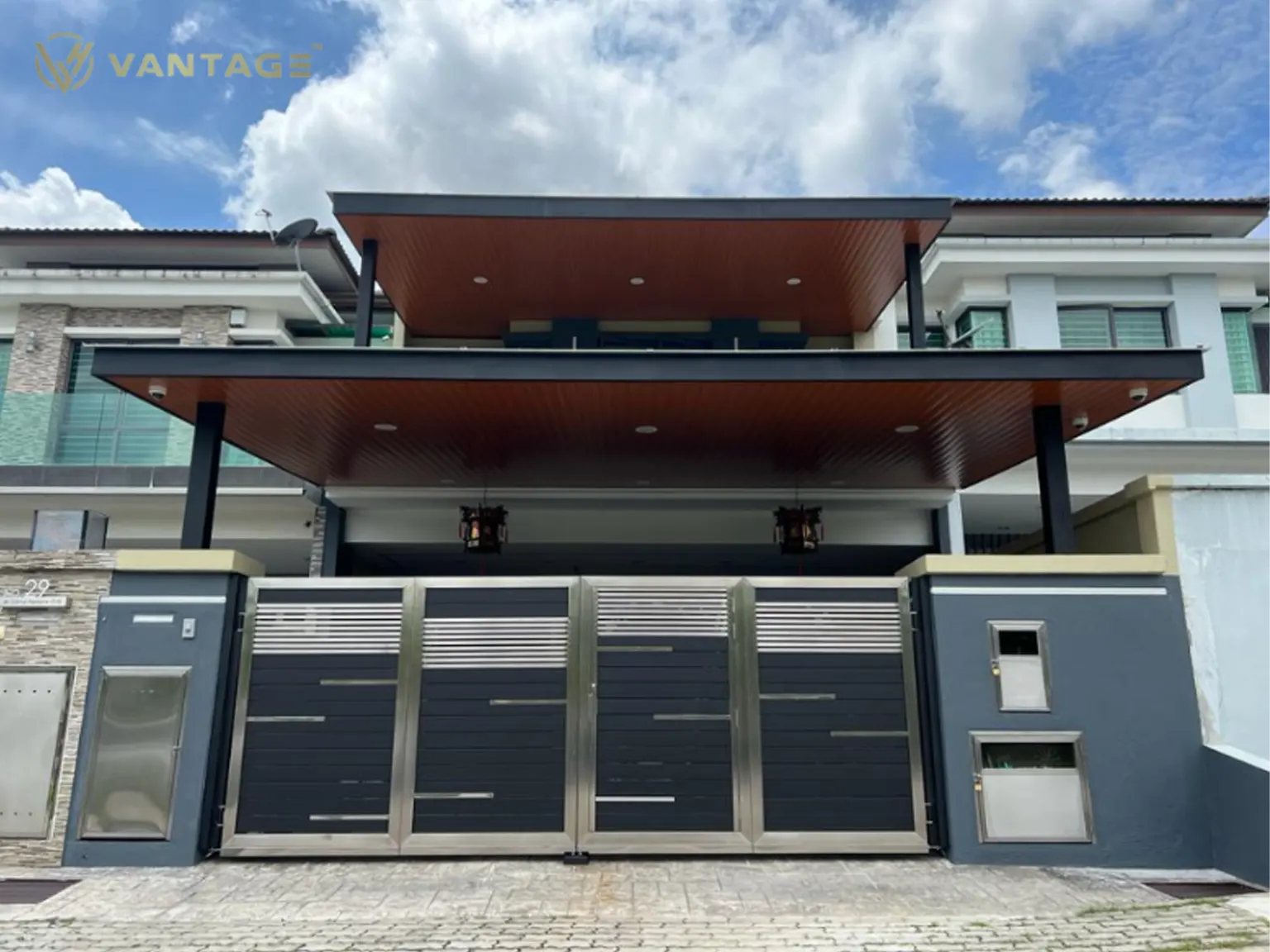
Real project: A wood-finish ceiling awning adds warmth while maintaining a clean, modern exterior.
- ACP Awning
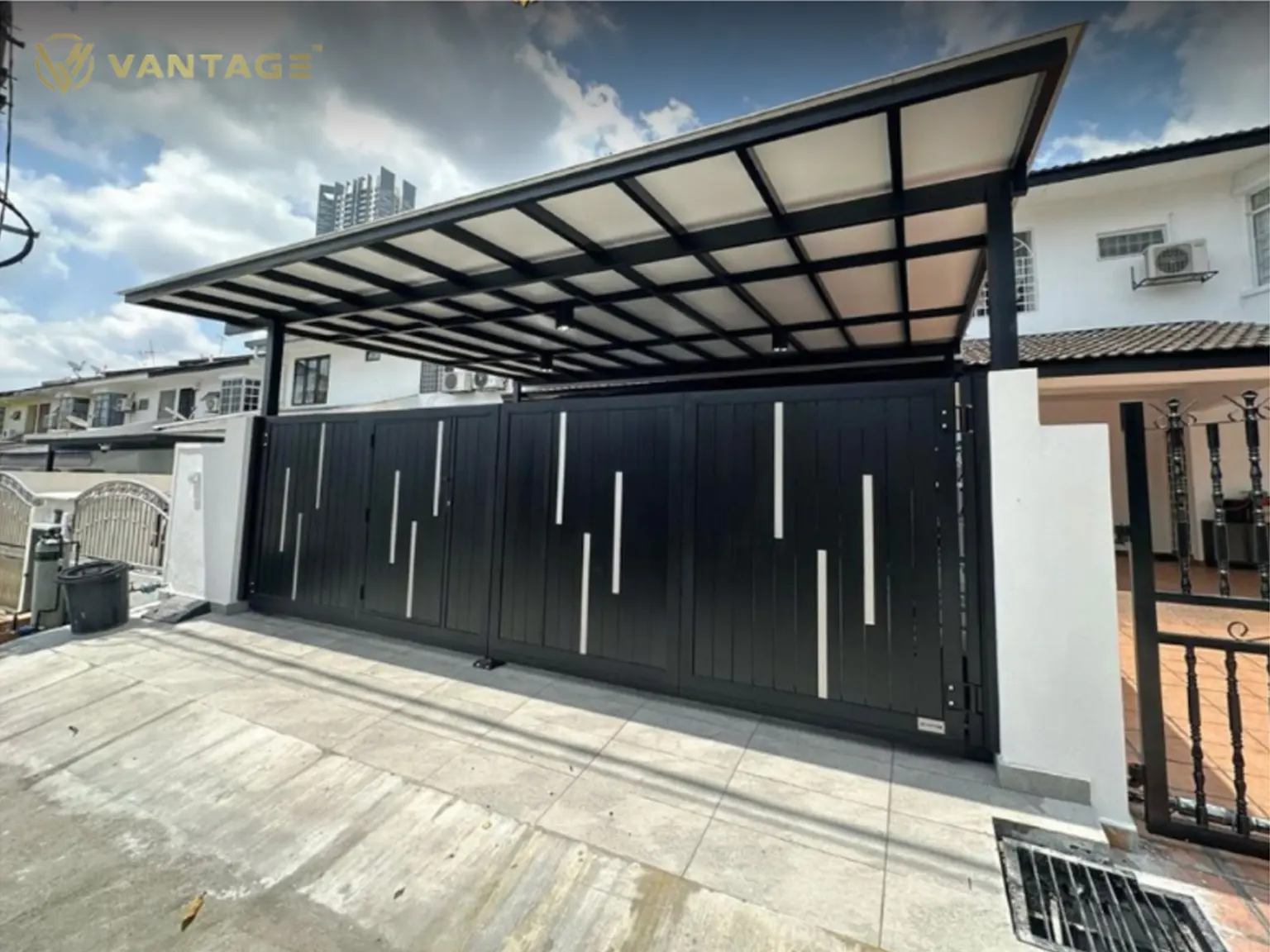
Real project: A clean-lined ACP awning complements modern architecture with a simple and timeless appearance.
These awning systems also pair beautifully with modern trackless autogates, security doors, and concealed lighting, creating a cohesive exterior design.
For Homes That Need More Natural Light
Some homeowners want weather protection without making their car porch feel dark.
In these situations, glass and polycarbonate are popular options because they allow natural daylight to enter while providing shelter from rain.
They are commonly used for:
- Side porches
- Walkways
- Patio areas
- Backyard extensions
Choosing between the two often depends on the desired appearance and overall design of the home.
For Homeowners Looking for Long-Term Value
Many homeowners focus heavily on the material itself.
However, long-term value depends on much more than the roofing material alone.
A quality awning is the result of several elements working together, including:
- Appropriate material selection
- Structural design
- Fabrication quality
- Drainage planning
- Professional installation
- Routine maintenance
In many cases, investing in better workmanship provides greater long-term value than simply choosing a more expensive material.
Can Different Awning Materials Be Combined?
Absolutely.
Modern homes increasingly combine two different awning materials to achieve a better balance between appearance, lighting, and functionality.
Some popular combinations include:
ACP + Glass
A popular solution for modern homes.
ACP provides solid coverage and shade, while glass allows natural daylight into selected areas such as the entrance.

Real project: An ACP awning paired with a glass canopy offers full weather protection while bringing natural daylight in.
Ceiling Awning + Glass
This combination creates a premium ceiling appearance while maintaining a bright and welcoming entrance.
It is a popular choice for modern landed homes seeking both comfort and architectural appeal.
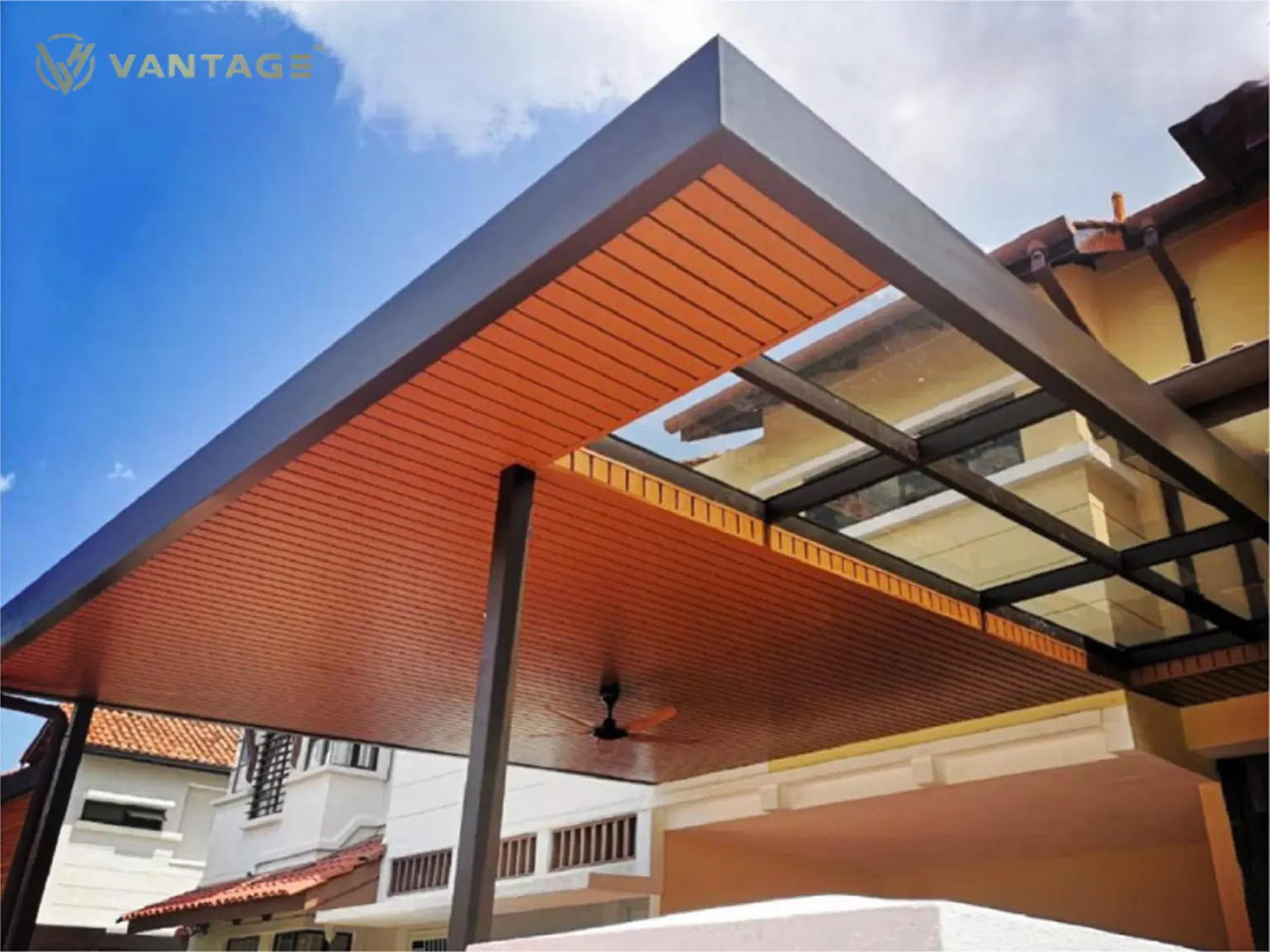
Real project: An ceiling awning paired with a glass canopy creates a warm, contemporary entrance with balanced shade and natural light.
Common Mistakes When Choosing an Awning Material
Choosing the right awning involves more than comparing material specifications.
Here are some common mistakes homeowners should avoid.
Choosing Based Only on Price
It’s natural to compare quotations.
However, focusing only on the lowest price may overlook important factors such as:
- Structural design
- Material quality
- Drainage system
- Fabrication standards
- Installation workmanship
A well-designed awning often provides better long-term value than simply choosing the cheapest option.
Assuming Every Material Performs the Same
Not all ceiling awning profiles, ACP panels, glass systems, or polycarbonate sheets are manufactured to the same standard.
Quality differences can affect durability, appearance, and long-term performance.
Rather than comparing only the material name, it’s worth understanding the quality of the products being offered.
Overlooking Installation Quality
Even the best awning material cannot compensate for poor workmanship.
Incorrect installation may lead to problems such as:
- Water leakage
- Poor drainage
- Uneven finishing
- Reduced durability
Choosing an experienced installer is just as important as choosing the right material.
Frequently Asked Questions
Which awning material lasts the longest?
There is no single answer.
The lifespan of an awning depends on the material, structural design, installation quality, environmental exposure, and how well it is maintained.
Which awning material reduces heat the best?
Heat reduction is influenced by several factors, including:
- Roofing material
- Roof colour
- Ceiling system
- Air gap
- Overall awning design
Rather than relying on one material alone, a well-designed awning system generally delivers better overall thermal comfort.
Which awning material is quieter during heavy rain?
Rain noise depends not only on the roofing material but also on the structural design and whether the awning incorporates a ceiling system.
For many homeowners, combining suitable materials with a well-designed ceiling can help create a quieter outdoor environment.
Is a ceiling awning better than polycarbonate roofing?
Both serve different purposes.
A ceiling awning is ideal homeowners looking for a refined ceiling finish with concealed structures, integrated lighting, and a premium architectural appearance.Polycarbonate roofing, on the other hand, is often preferred when maximising natural daylight is the primary objective.
The better option depends on your home’s design and how you intend to use the space.
Can I combine different awning materials?
Yes.
Many modern homes combine materials such as ACP, ceiling awning, glass, and polycarbonate to achieve the right balance of shade, lighting, privacy, and aesthetics.
Final Thoughts
So, which awning type is best for your home in Malaysia?
There is no one-size-fits-all answer.
If you prefer a clean and contemporary appearance with concealed structures and integrated lighting, ceiling awnings and ACP awnings are excellent choices. If maximising natural daylight is more important, glass and polycarbonate awnings remain popular options for many Malaysian homes.
Most importantly, remember that the awning itself is only one part of the equation.
Structural design, fabrication quality, drainage planning, and professional installation all play a significant role in determining how well an awning performs over time.
By understanding the strengths of each awning type, you can make a more informed decision and choose a solution that not only enhances your home’s appearance but also delivers lasting value for years to come.
Need Help Choosing the Right Awning for Your Home?
Every home is different, which means the most suitable awning solution should be based on your property’s layout, orientation, architectural style, and how you use the space.
At VANTAGE, we take a consultation-first approach, helping homeowners compare ceiling, ACP, glass, and polycarbonate awning options based on practicality, appearance, and long-term value—not just material alone.
If you’re planning to install an awning in Klang Valley or the surrounding areas, our team is happy to help you explore the most suitable solution for your home.
Menu
Products
Contact Information
© Copyright 2026 Vantage