
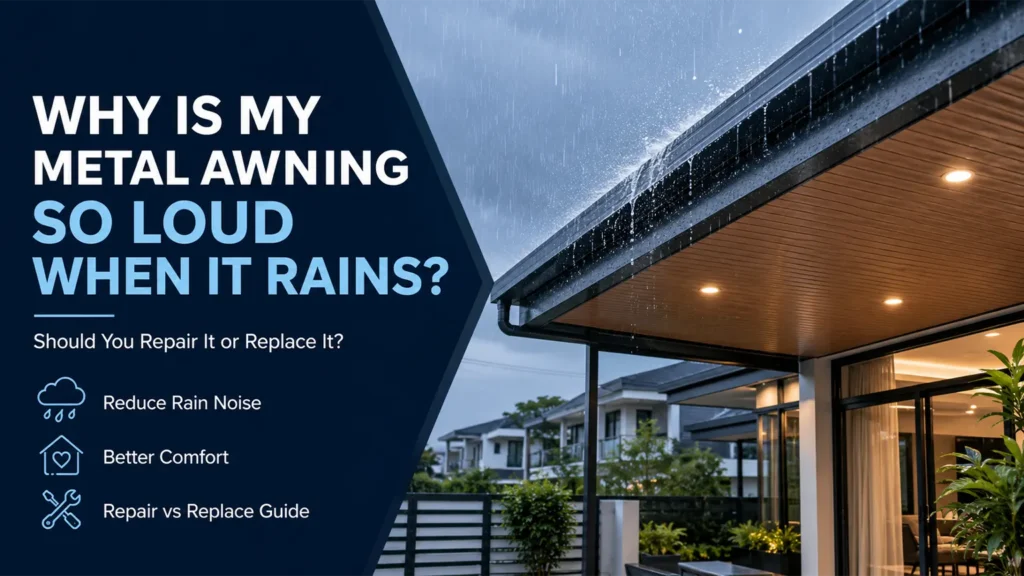
Why Is My Metal Awning So Loud When It Rains? Should I Repair or Replace It?
Living in Malaysia means dealing with heavy rain throughout the year.
While many homeowners appreciate the cooler temperatures that come with a downpour, rain can also reveal another common problem — excessive noise coming from the awning.
If you’ve ever found yourself turning up the TV volume, speaking louder during conversations, or being woken up by the sound of rain hitting your awning, you’re not alone.
In fact, this is one of the most common concerns homeowners raise during site inspections.
The good news is that a noisy awning does not always mean something is broken. In many cases, the issue can be improved without replacing the entire structure.
In this guide, we’ll explain why metal awnings become noisy during rain, how to tell whether it’s a normal characteristic or a sign of a larger problem, and when repair, upgrading, or replacement may be the better long-term solution.
Why Is My Metal Awning So Loud When It Rains?
The main reason is simple.
Metal is a hard material. When rain hits the surface, it creates vibrations. These vibrations produce sound.
In Malaysia, rain is often heavy and intense. The stronger the rainfall, the louder the sound becomes.
Some homeowners notice the noise more at night because the surroundings are quieter, making the rain sound even louder.
Does a Noisy Awning Mean Something Is Wrong?
Not necessarily.
A metal awning can be noisy even when it is still structurally sound. In many cases, the sound is simply a result of heavy rain hitting a hard roofing surface.
However, if the noise has become noticeably worse over time, it may be worth looking beyond the roofing material itself.
During site inspections across Klang Valley and surrounding areas, we often find that excessive rain noise can sometimes be linked to other underlying issues, including:
- Loose screws or fasteners
- Weak or aging support structures
- Rust and corrosion
- Water leakage
- Poor drainage performance
- Excessive movement during strong winds
If your awning is otherwise in good condition and the only concern is noise, simple improvements such as structural reinforcement, insulation, or a ceiling system may be enough.
On the other hand, if the noise is accompanied by rust, recurring leaks, structural deterioration, or multiple maintenance issues, it may be worth considering a more comprehensive upgrade or replacement.
The key is to identify whether the noise is simply a characteristic of the material, or a symptom of a larger problem developing within the awning system.
Can a Noisy Awning Be Improved Without Replacing It?
In many cases, yes.
If the structure is still in good condition and there are no major issues such as severe rust or recurring leaks, a complete replacement may not be necessary.
Depending on the condition of the existing awning, homeowners may be able to improve comfort by:
- Reinforcing loose structural components
- Installing a ceiling system beneath the awning
- Adding insulation materials to reduce vibration and heat transfer
One of the most common upgrades we see today is the addition of an aluminium ceiling system. Besides creating a cleaner and more finished appearance, it can also help soften rain noise and improve overall comfort beneath the awning.
The most suitable solution depends on the condition of the structure, the roofing material used, and the level of noise reduction the homeowner is hoping to achieve.
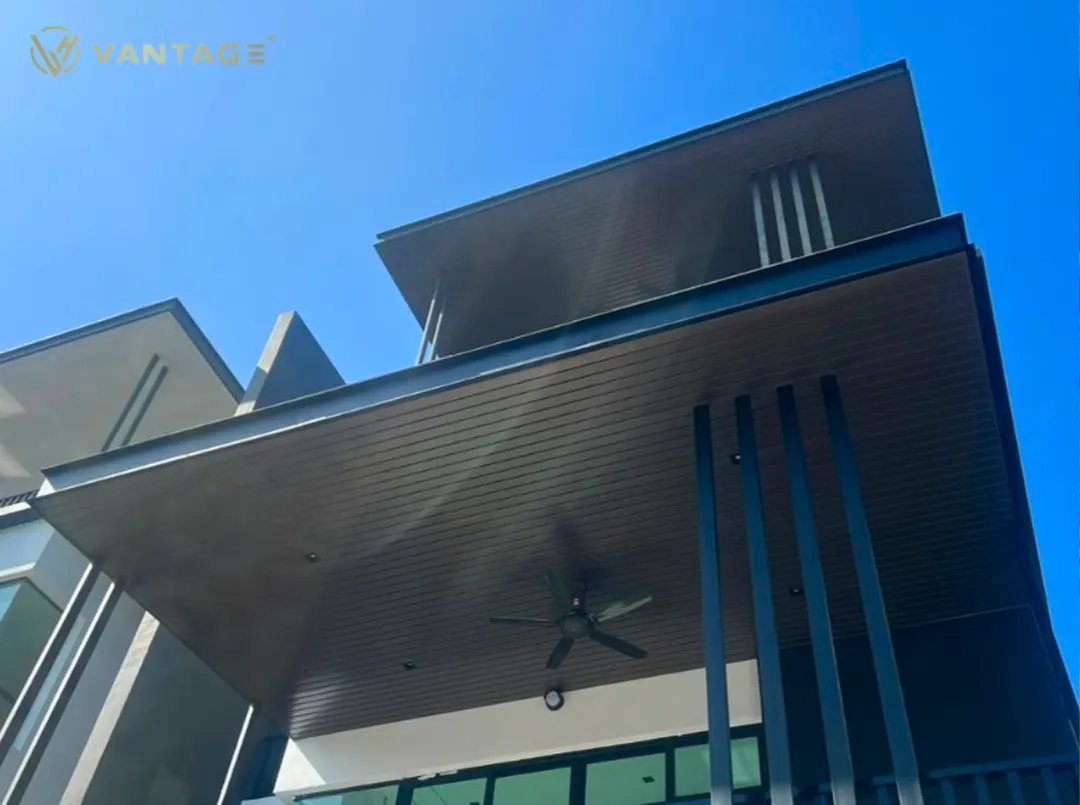
*Adding a ceiling system is one way homeowners improve comfort without replacing the entire awning structure.
Repair, Upgrade, or Replace? A Simple Decision Guide
Before spending money on a full replacement, it helps to understand which option best suits your situation.
| Condition | Recommended Solution |
| Minor noise, no rust, no leaks | Repair or Upgrade |
| Noise with loose components | Structural Reinforcement |
| Noise and excessive heat | Ceiling System or Insulation Upgrade |
| Recurring leaks and aging materials | Consider Replacement |
| Widespread rust or structural deterioration | Replacement Recommended |
Many homeowners are surprised to discover that a relatively small improvement can sometimes solve the problem.
The best solution depends on the overall condition of the awning, not just the noise level.
What Awning Materials Are Better for Noise Reduction?
If replacement is the best option, choosing the right material can make a noticeable difference.
PU Foam Roofing
PU Foam roofing is one of the most popular solutions for homeowners seeking improved comfort.
Benefits include:
- Better sound insulation
- Better heat insulation
- Improved comfort during hot weather
For homeowners whose primary complaint is rain noise, PU Foam roofing is often one of the most effective options.
Polycarbonate Roofing
Polycarbonate remains popular because it allows natural daylight into the space.
However, homeowners should still expect noticeable rain noise during heavy Malaysian downpours.
If noise reduction is the top priority, other materials may perform better.
Glass Roofing Systems
Glass roofing offers a premium appearance and excellent natural lighting.
When paired with proper structural design and ceiling systems, it can create a comfortable and modern outdoor space.
Aluminium Ceiling Systems
Many modern awning designs now incorporate aluminium ceiling systems to improve both aesthetics and comfort.
Benefits include:
- Cleaner appearance
- Better sound control
- Low maintenance
- Improved integration with drainage systems
Common Mistakes Homeowners Make When Replacing a Noisy Awning
Choosing Based Only on Price
The lowest quotation does not always provide the best long-term value.
Ignoring Installation Quality
Even premium materials can perform poorly if installed incorrectly.
Overlooking Drainage Design
Many noise complaints are related to drainage rather than roofing materials.
Focusing Only on Roofing Material
Comfort is influenced by the entire system, including:
- Roofing material
- Structural design
- Ceiling design
- Drainage planning
- Installation workmanship
Final Thoughts
If your metal awning becomes extremely noisy whenever it rains, the cause may not always be the roofing material itself.
In our experience, factors such as structural vibration, drainage design, installation quality, and the overall condition of the awning often play an equally important role.
This is why two awnings built from similar materials can perform very differently over time.
Before deciding on repairs or replacement, it is worth understanding the actual source of the problem. A proper assessment can often help homeowners avoid unnecessary renovation costs while identifying the most practical long-term solution.
For homeowners in Klang Valley and surrounding areas, VANTAGE provides site inspections to help evaluate existing awning systems and recommend solutions based on the property’s condition, design goals, and budget.
Whether the answer is a simple improvement or a complete upgrade, understanding the real cause of the problem is always the first step toward creating a quieter and more comfortable home.
Thinking about repairing or replacing your awning?
If you’re experiencing excessive rain noise, recurring leaks, or an aging awning structure, our team can help assess your existing setup and recommend practical solutions tailored to your home’s needs.
Contact VANTAGE today to arrange a site inspection and explore the most suitable option for your property.
Menu
Products
Contact Information
© Copyright 2026 Vantage